


 14 / 14
 stack.net.au
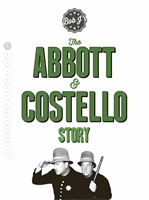
THE ABBOTT & COSTELLO STORY
veritable lifesavers for
the studio. Marjorie Main
(who had played the
Widow of Wagon Gap)
and Percy Kilbride were
two character actors who
played poverty stricken
hillbillies in the feature
film
The Egg and I
(1947).
Their characters captured
all the notices when the
film was released and
consequently, Ma and Pa
Kettle plus their fifteen kids
would go on to appear in a ten-film series.
Francis the Talking Mule and his less than
bright master (played by Donald O’Connor)
would also appear in a similar series.
Once again, UI found that placing the
names Ma and Pa Kettle and Francis in their
respective film titles negated any money
being spent on advertising, which helped
to maximise their profits. This was noted
– and sarcastically highlighted – by Hedda
Hopper when she wrote in her gossip
column, “I hear that everyone at Universal-
International is happy because the Abbott
and Costello pictures plus Ma and Pa Kettle
pay all the studio staff salaries”.
Reading Hopper’s article prompted Bud
and Lou to demand that the UI executive
allocate bigger budgets for future A&C
movies. An enraged Lou confronted UI’s
studio boss, William Goetz, demanding
better stories, location shoots and films
in colour. “None of the 26 movies we’ve
made for your damn studio have ever
been in colour,” he ranted. But Goetz
was unhearing to their demands as
he saw no purpose in increasing their
budgets, especially as his policy of making
other “prestigious” films had already lost
the studio $12 million.
Snubbing UI by using their contractual
agreement (which permitted them to make
one independent film per year), Bud and
Lou decided to invest their own money in
two colour productions and release them
through Warner Bros. Lou’s choice was
the fairy story
Jack and the Beanstalk
(1952) and Bud’s was
Abbott and Costello
Meet Captain Kidd
(1953). The result was
a disappointing return for Lou’s production,
partly because the portly
46-year-old Costello was
unconvincing as a youthful
giant killer.
Captain Kidd
fared better with more
of an adult theme and a
fine performance from
Charles Laughton, who
resurrected his role of
the pirate captain he had
played in a 1945 movie.
Abbott and Costello’s
relationship with UI had
now became untenable,
and the studio seemed eager to dispose
of them – which they finally did in 1955.
Times had changed and the duo’s comedy,
which had perfectly fitted the war years,
now seemed dated. Plus, there were two
new kids on the Hollywood block, who, by
the early 1950s, had shot to the top of the
box office list.
Dean Martin and Jerry Lewis were now
moviegoers’ favourite big screen comedy
duo. Lou and Bud’s descent was almost as
rapid as their rise to stardom. They moved
into television with
The Abbott and Costello
Show
, which at first proved popular but
was cancelled after two seasons when
the pair demanded more money. After
one more film –
Dance with Me Henry
(1956), independently made at United
Artists and a box office flop – the pair finally
split, which went almost unnoticed by the
media. Bud and Lou never saw or spoke to
each other again.
Throughout their movie careers, both
Bud Abbott and Lou Costello had been
big spenders and inveterate gamblers. At
the height of their popularity they were
the highest earners in Hollywood, but
that also placed them into a brutal tax
bracket. Their agent, Eddie Sherman, had
continually reminded them to honour their
tax obligations and to hire the very best
financial advisors. But unfortunately for
them, they hadn’t, and as a consequence
they suffered dearly for not ensuring their
taxes had been paid regularly. In 1957,
the Internal Revenue Service audited
Bud and Lou’s finances and found that
they owed Uncle Sam years of unpaid
taxes. This resulted in a serious loss
of assets including their homes and all
of their film rights, which forced them
both into bankruptcy. Following two
years of continuous financial stress, Lou
suffered a fatal heart attack a few days
after completing his first solo comedy,
The 30 Foot Bride of Candy Rock
(1959).
He was just 52 years old. Bud, although
now practically destitute, would survive
his old partner by almost 15 years, finally
succumbing to cancer in 1974.
The Abbott and Costello story ended as
just another one of many Hollywood
personal tragedies. Yet Bud and Lou left a
legacy of comedy film work that
contains all of the classic burlesque and
vaudeville routines that otherwise would
have been lost to future generations. Their
baseball skit “Who’s On First” is probably
their most enduring sketch, and a gold
record of their famous routine has been
placed in the Baseball Hall of Fame.
Moreover, in the 1988 Oscar-winning movie
Rain Man
, Dustin Hoffman’s autistic
character, Raymond Babbit, recites an
affectless “Who’s on First” as a defence
mechanism when anything upsets him. No
doubt Bud and Lou would have been proud
of that.
Scene from
Jack and the
Beanstalk
(1952)
Charles Laughton and Lou
Costello in
Abbott and Costello
Meet Captain Kidd
(1953)
1
2
3
4
5
6
7
8
9
10
11
12
13
14