


 19 / 60


COVER ARTICLE
FEATURES:
• Control systems+ automation
• Hazardous areas+ safety
• Plantmaintenance, test+measurement
• Temperaturemeasurement
• Energy+ enviroFiciency: Focus onDrives,motors+ switchgear
I
t’s hard to believe but before the contactor was invented, switching
on an electrical load was not automatic. Imagine having to manu-
ally switch on motors in applications such as heating, foundry and
industry?
The invention of the contactor in 1924 byTelemecanique, now Sch-
neider Electric, meant for the first time this could now be automated
and with it came improved safety for workers.
After André Blanchet filed a patent for the first bar contactor, the
company began producing 40 A contactors, timers, distribution
Schneider Electric
Automation and Control
Invention of the first contactor
When the switch became automated
boxes, pushbuttons, stop contacts and relays.They quickly expanded
the business to become a leading specialist in industrial control and
automation.
The last 90 years has seen continuous innovation
With safety at the heart, Schneider Electric has continued to innovate
with not only the introduction of finger safe terminals but influencing
the safety standards for contactors too. Over the years the contactor
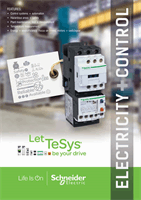
has evolved to the present day, the unique TeSys U offering multiple
functions in one device. Everlink, unique to us, is enhanced withmany
safety features such as well shrouded terminals and the elimination
of ‘copper creep’ that can lead to terminals loosening and dangerous
over-heating.
Ninety years of evolution and innovation has resulted in a wide
choice of products, Nowadays TeSys is the market leading motor
starting and power switching range providing customers with a
perfect solution for any application.
The new LR9D and LR97D electronic overload relays complement
the existing line of products, known as some of the most energy
efficient, comprehensive and reliable products in the market. The
newTeSys LR9D Electronic Overload Relay offers a unique selectable
trip class and allows customers to select between Class 5, Class 10,
Class 20 and Class 30. This enables the customer to set a desired
level protection for added flexibility. The 5:1 current adjustment
range makes these new relays a natural choice for a wide range of
applications, from 0,1 to 110 A.
Enquiries: Customer Care:
Tel. 086 1300 222 (RSA)
+27(0)11 230 5880 (Intl.) or
Scan the code
to go to our
website to see
other latest
products.
17
March ‘16
Electricity+Control