


 8 / 72


façade had been retained. This was done by resleeving the old tubes
with a new semi-circular concrete structure, 200 mm thick and separated
from the old with a spray on insulation. The resleeving process required
concrete form work to be specifically constructed to the internal shape
of the bins; this was then lowered into the bins by crane and concrete
poured from the base up in a number of stages. This process was
also required to form the new structure for the atrium in the centre
of the building.
This was even more complicated as it required each tube forming
part of the future atrium cut to be set out in visual isolation from the
next, with the concrete poured to the exact curve of the atrium cut.
This required some major innovation with AfriSam as the tapering
edge of the cut in numerous areas was less than 50 mm thick, as well as
tapering upwards at the base of the atrium. To set out and pour perfect
concrete with these sorts of constraints is no mean feat.
Whilst the resleeving was in process, the base slab was also being
cast. This required clearing out the base level of the silos and then
undercutting the bins so that they were each sat on a block of concrete
about 400 mm wide. The base slabs could then be cast. This slab would
act as a major part of the structural design as it tied the base of all the
bins together to ensure the vertical loads were passed down directly to
the foundations.
Once these works were completed, the demolition of the internal
bins could commence. Both in the east, to create the eastern core and
museum galleries, and in the west where the new concrete was used as
a guide to cut the old to form the atrium itself. This demolition process
was undertaken in a number of different ways with the most intricate in
the atrium where blocks of concrete were cut by large diamond blades,
before being lowered to the floor and carted off site. The silos were liter-
ally taken apart piece by piece.
Keytel says the large one square metre blocks were dropped inside
the bins and removed by a 20 ton excavator. Once the structures had
been cut down to 18 metres, the demolition was quickened by using the
20 ton machine with a breaker attachment.
Once this process had been completed, the carving and the polishing
of the atrium shape could commence in earnest. At high level, 30 metres
above the ground, these activities were undertaken on special hanging
platforms suspended from the top of the silos.
COVER STORY
In parallel to the works in the storage annex, the portion of the atrium
within the elevator building was also being formed. This did not require
any strengthening of the actual bins, but did require the construction of
a large transfer beam at Level 6 to span the arch and transfer the load of
the hotel above down through the vertical structure.
Another interesting aspect of the structure is the sculpture garden
and trafficable skylights on the roof that are being supported on a struc-
tural steel frame, as well as the restaurant and event space occupying the
last two floors of the building that have been built on a coffer slab.
Trusted supplier
Part of WBHO’s success on this project is the reliable service it has
received from AfriSam, which is supplying 9 800 m
3
of concrete for the
Grain Silo project.
The leading construction materials supplier has nurtured a strong
business relationship with the building contractor over many years,
and WBHO relies on its extensive experience in concrete mix design and
consistent quality production of materials. This was brought to the fore
again on this project for the main 30 MPa concrete mix with a nine milli-
metre stone used for the silo sleeves.
This mix was developed over a period of testing to ensure that it
would have the correct consistency. Aggregates were an important factor
in the final mix design as the surface finish had to meet the stringent
specifications of the architect and also had to comply with the worka-
bility requirements.
Each daily pour was a slow discharge because of the workability and
the way the complex formwork was positioned inside the silos. This is
just one example of the flexibility that AfriSam brings to its customers’
unique construction site requirements.
On average, there were two daily pours of 4 m
3
each and discharge
time was two hours. Traditionally, offloading should take anything from
45 to 60 minutes.
It is apparent that all involved on this project have an appetite for
complex and sophisticated builds that demonstrate the capability of
South African built environment professionals. The Grain Silo promises to
be one of them.
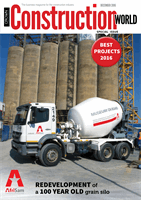
WBHO is making steady progress on the
redevelopment of the 100 year old Grain Silo which
will house the Zeitz Museum of Contemporary Art
Africa (Zeitz MOCAA). Once completed, it will be a
flagship project for the building contractor.
All photographs by Grant Duncan-Smith of
Subiaco Photography.
6
CONSTRUCTION WORLD
DECEMBER
2016