


 34 / 96


32 /
visitportland.com/ @visitportland / #visitportland
PUTTING A NAME TO THE PLACE
What's in a name? In Greater Portland, it's no less than America's history.
FORT GORGES, 1858
Named after Ferdinand Gorges who was
deeded by Britain as the original land-
holder of the Casco Bay area in 1622.
FIRST PARISH CHURCH, 1728
The Longfellow family pews are still
reserved, and a canon ball from a
Revolutionary War attack is mounted in
the chandelier.
WADSWORTH-LONGFELLOW
HOUSE, 1786
Famed poet HenryWadsworth Longfellow
grew up in downtown Portland's oldest
building, and its easy to find local
inspiration in much of his work. The
family home was preserved by his sister.
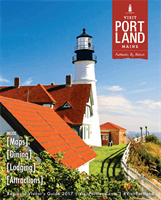
PORTLAND HEAD LIGHT, 1791
While not named after our first President,
GeorgeWashington commissioned this first
U.S. lighthouse in 1786. The Keeper's quarters
were approved byGov. JohnHancock.
PORTLAND, OREGON, 1845
Of the two founders of this western city,
Portland, Maine native Francis Pettygrove
won the coin toss deciding after whose
home the fledgling town would be named.
Asa Lovejoy of Boston lost.
BULL FEENEY'S, 1866
Charles Q. Clapp Building (rebuilt after
the Great Fire) houses this pub named
for film direcor John Ford—born John
Feeney. The Maine native was nicknamed
"Bull" for his tenacity on Portland High
School's football team. He masked his sur-
name with that of the popular car because
of hostility toward the Irish in Hollywood.
LINCOLN PARK, 1866
Lincoln Park, named after the recently
slain President, was created as a firebreak
after the Great Fire that destroyed the city
a third time. The fire was started when
Fourth of July fireworks ignited the blaze
celebrating the end of the Civil War.
PHOTOS, CLOCKWISE FROM TOP LEFT: LARRY EMERSON; ROBERT WITKOWSKI/VISIT PORTLAND; CFW PHOTOGRAPHY; ROBERT WITKOWSKI/VISIT PORTLAND; COREY TEMPLETON